Down Payment Strategies Beyond 20%
For decades, homebuyers have heard a simple rule: save 20 percent for a down payment. The rule has a real logic behind it, because a 20 percent down payment usually avoids private mortgage insurance and gives you immediate equity. But treating 20 percent as the only respectable choice causes many buyers to wait years longer than necessary, to drain every dollar of savings, or to buy less house than they can sensibly afford. Down payment strategy is richer than a single number, and the best choice depends on your savings, income, debts, timeline, and tolerance for risk.
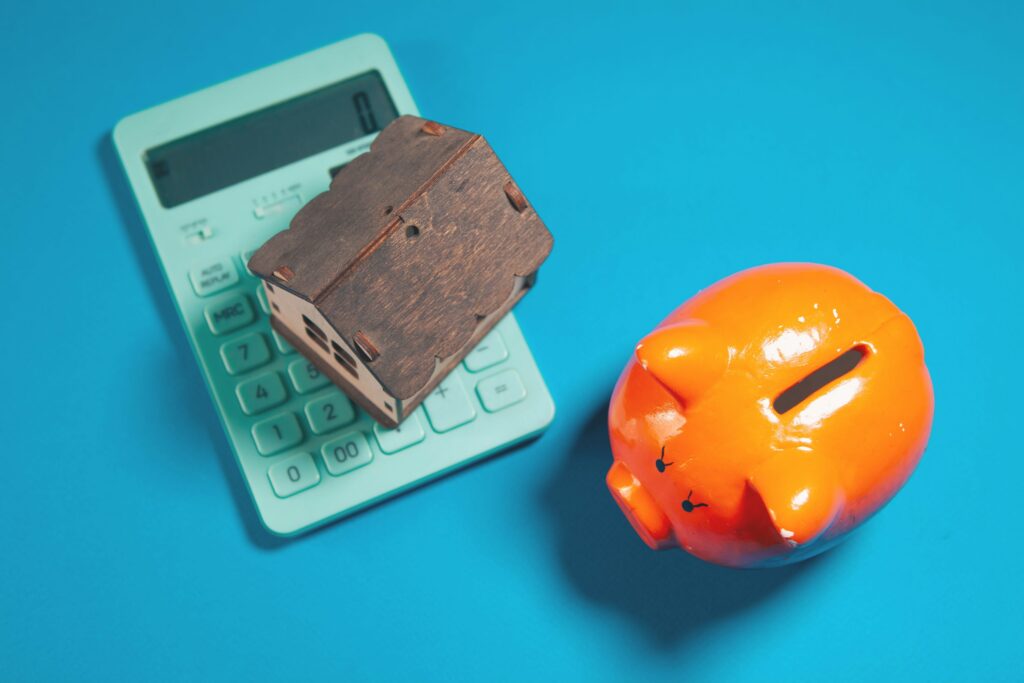
This article looks beyond the 20 percent benchmark. It compares several down payment levels on the same house, explains the trade-offs in cash, monthly payment, insurance, and flexibility, and offers practical strategies for building and deploying a down payment wisely. All rates are illustrative examples only, not current market rates, and program terms vary, so confirm current details with a licensed mortgage professional before deciding.
Why 20 percent became the benchmark
The 20 percent figure comes from the conventional lending world. When you put down 20 percent, you borrow 80 percent of the home’s value, and the lender has a substantial equity cushion if you default or if prices fall. Because of that cushion, lenders generally do not require private mortgage insurance at 20 percent down, which lowers your monthly payment and simplifies the loan. It is a clean, easy-to-explain threshold, which is why it survived as folk wisdom long after lending options diversified.
The deeper question is not whether 20 percent is good in the abstract, but what giving up that cash costs you. Money used for a down payment is no longer available for emergencies, repairs, moving costs, or investing. Money kept in reserve, on the other hand, costs you a larger loan and possibly mortgage insurance. The right balance is personal, and it should be decided with your whole financial picture in view, not by a slogan.
The same house at four down payment levels
A worked example makes the trade-offs concrete. Imagine a home priced at 300,000 dollars, financed over 30 years. For illustration, at an example rate of 6 percent per year with monthly compounding, the monthly rate is 6 percent divided by 12, or 0.5 percent per month. The figures below show principal and interest only, before taxes, homeowners insurance, and any mortgage insurance, which would be added in real life and would vary by loan type and borrower.
At 20 percent down, you pay 60,000 dollars upfront and borrow 240,000 dollars. The principal and interest payment is about 1,439 dollars per month. At 10 percent down, you pay 30,000 dollars and borrow 270,000 dollars, for a payment of about 1,619 dollars per month. At 5 percent down, you pay 15,000 dollars and borrow 285,000 dollars, for a payment of about 1,709 dollars per month. At 3 percent down, you pay 9,000 dollars and borrow 291,000 dollars, for a payment of about 1,745 dollars per month.
Read those numbers as a ladder, not a verdict. Moving from 20 percent down to 10 percent down saves 30,000 dollars in cash today but adds about 180 dollars per month for thirty years, plus any mortgage insurance. Moving from 10 percent to 5 percent saves another 15,000 dollars in cash but adds only about 90 dollars per month in principal and interest. The cash saved gets smaller as you go lower, while the insurance and interest costs accumulate. That pattern is why many buyers find a middle level, such as 10 percent, more attractive than either extreme once they see the full picture.
What a smaller down payment really costs
The most visible cost of a smaller down payment is the larger loan and higher monthly payment shown above. The less visible cost is mortgage insurance. With a conventional loan below 20 percent down, you will usually pay private mortgage insurance until you reach enough equity and meet your lender’s cancellation conditions. That insurance protects the lender, not you, and it adds to your monthly cost without reducing your loan balance. Ask your lender to show the insurance amount separately, and to explain in writing when it can be removed.
A smaller down payment also means thinner equity at the start. If you put down 3 percent and home prices fall by 5 percent, you could owe more than the home is worth, which makes selling or refinancing difficult. That risk is highest in the first few years, when amortisation has barely reduced the balance. Buyers with small down payments should therefore think carefully about how long they expect to stay, and should avoid stretching to a price that leaves no room for a market dip.
What a larger down payment really costs
A larger down payment is not free either. The cash you put into the house is locked in the property. If you lose your job, face a medical bill, or discover a major repair, you cannot easily withdraw that equity without borrowing against the home, which takes time and may not be available in a crisis. Financial advisers often describe this as a liquidity trade-off: a larger down payment lowers your monthly payment but reduces your flexibility when life goes wrong.
Strategies that go beyond the percentage
One useful strategy is to separate your down payment from your emergency fund, and never let the first consume the second. Decide in advance how many months of essential expenses you want to keep untouched after closing, then treat only the money above that reserve as available for a down payment. If that leaves you at 10 percent instead of 20 percent, that is a disciplined choice, not a failure.
Another strategy is to plan the path to removing mortgage insurance from the start. If you choose a conventional loan with less than 20 percent down, ask how equity is measured, whether home appreciation counts, and whether you will need a new appraisal to cancel insurance. Some buyers make extra principal payments in the early years specifically to reach the cancellation threshold sooner, which can save more in insurance than the extra payments cost in cash flow, provided the budget allows it.
A third strategy is to use gift funds or down payment assistance correctly, where you are eligible. Family gifts are common, but lenders require documentation showing the money is a gift, not a loan that must be repaid. Down payment assistance programs, offered by states, local governments, and nonprofits, can provide grants or low-cost second loans, but they come with their own eligibility rules, repayment terms, and sometimes resale restrictions. Explore these options early, because they can affect which loan programs you qualify for and how long approval takes. Rules change — check the program’s official page before deciding.
- Keep an emergency reserve separate from your down payment, and do not spend it to reach an arbitrary percentage.
- Get mortgage insurance terms in writing, including the amount, the duration, and the exact cancellation process.
- Compare total cash to close, not just the down payment, because closing costs can add several thousand dollars.
- Document any gift funds promptly and completely, so underwriting is not delayed by missing paperwork.
- Revisit the plan if your price range changes; a percentage that worked at one price may be unwise at a higher price.
Saving for a down payment without derailing your life
Saving a down payment is a marathon, and the most sustainable plans are boring ones: a separate savings account, an automatic transfer on payday, and a clear target date. Treat the transfer as a fixed expense, not as whatever is left at the end of the month, because what is left is usually nothing. Review the plan every few months, and adjust it when income or expenses change, rather than abandoning it after a setback.
Choosing your number
To choose your down payment, work through four questions in order. First, how much cash can you put down while still keeping an emergency reserve after closing costs? Second, what monthly payment, including insurance, taxes, and homeowners insurance, can you afford comfortably, not just barely? Third, how long do you expect to stay in the home, and does that horizon justify paying mortgage insurance for a time? Fourth, what else could that cash do, such as paying down expensive debt or funding retirement, and which use matters most to you?
There is no shame in a small down payment, and no virtue in an unnecessarily large one. A 20 percent down payment is a useful benchmark, but it is not a moral test. The best down payment is the one that gets you into a home you can afford, leaves you with a buffer for life’s surprises, and keeps your monthly payment sustainable for years, not just for the first month after closing. Choose the number that does that for your situation, document the reasoning, and revisit it if your circumstances change before you buy.
Educational content only, not financial advice. Rates, rules and program terms change — confirm current details with a licensed mortgage professional or the program’s official source before deciding.