How Your Credit Score Shapes Your Mortgage Rate
Your credit score is one of the first numbers a mortgage lender looks at, and it can shape your loan in ways that are easy to underestimate. It influences whether you are approved at all, which loan programs are open to you, what interest rate you are offered, and how much you pay for mortgage insurance. Two buyers purchasing identical homes can therefore end up with monthly payments hundreds of dollars apart, for no reason other than the history recorded in their credit files.
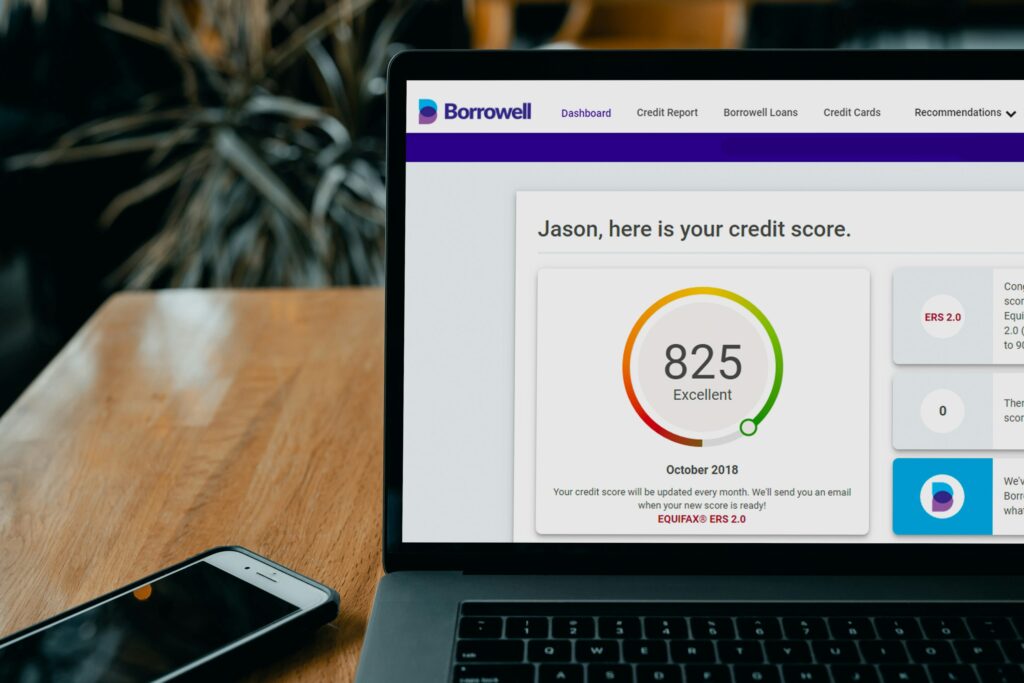
This article explains how that happens, why lenders care so much about credit, and what you can realistically do to improve your position before you apply. All rates in this article are illustrative examples only, not current market rates, and lending standards vary by lender and program. Rules change — check the program’s official page before deciding, and confirm any specific requirement with a licensed mortgage professional.
What a credit score actually measures
A credit score is a numerical summary of your borrowing history, built from information in your credit reports. The most widely used scores in mortgage lending are produced from models that weigh factors such as whether you pay on time, how much of your available credit you use, how long you have had credit accounts, how many recent applications you have made, and what mix of account types you hold. Payment history usually carries the greatest weight, which makes sense: a lender wants to know, above all, whether you have paid reliably in the past.
How lenders use your score to price a loan
Lenders use credit scores to estimate risk. Borrowers with stronger histories have, on average, defaulted less often in the past, so lenders can offer them lower rates and still expect a reasonable return after accounting for risk. Borrowers with weaker histories are statistically more likely to miss payments, so lenders charge more to compensate for that risk, require larger down payments or mortgage insurance, or decline the application altogether. This practice is called risk-based pricing, and it is central to how mortgages are priced.
Mortgage insurance is another channel through which credit affects cost. With a conventional loan and less than 20 percent down, the cost of private mortgage insurance often depends in part on your credit score, so a lower score can mean both a higher rate and higher insurance. With other loan programs, the insurance structure differs, but credit still influences approval and pricing in some form. Always compare the full monthly payment, including insurance, when you compare offers, because a rate quote alone hides part of the credit effect.
A worked example: the same loan, different illustrative rates
The arithmetic shows why credit deserves attention months before you buy. Imagine two buyers, each borrowing 300,000 dollars over 30 years. For illustration, suppose the buyer with stronger credit is offered an example rate of 5.5 percent per year, while the buyer with weaker credit is offered an example rate of 7 percent per year. These are illustrative examples only, chosen to show the mechanism, not predictions of what any borrower will be offered.
With monthly compounding, the monthly rate is the annual rate divided by 12. At 5.5 percent per year, the monthly rate is about 0.458 percent, and the principal and interest payment over 360 monthly payments is about 1,703 dollars per month. At 7 percent per year, the monthly rate is about 0.583 percent, and the payment is about 1,996 dollars per month. The difference is about 293 dollars per month, or about 3,516 dollars per year, for the same loan amount and the same house.
Over the full 30-year term, if neither borrower refinances or makes extra payments, the gap becomes striking. The borrower at the illustrative 5.5 percent rate would pay about 613,213 dollars in total principal and interest, while the borrower at the illustrative 7 percent rate would pay about 718,527 dollars. That is a difference of more than 105,000 dollars, driven entirely by the illustrative rate difference in this example. Real pricing differences vary, and many borrowers refinance or move before thirty years, but the example explains why a few months spent improving credit can be worth more than months spent hunting for a slightly cheaper home.
A smaller illustration is also instructive. For illustration, at an example rate of 6 percent per year, the monthly rate is 0.5 percent, and the payment on the same 300,000 dollar loan is about 1,799 dollars per month. At an example rate of 6.5 percent per year, the monthly rate is about 0.542 percent, and the payment is about 1,896 dollars per month. Even a half-point illustrative difference costs about 97 dollars per month, or about 1,164 dollars per year. Credit improvements do not need to be dramatic to be financially meaningful.
Credit and loan program access
Beyond pricing, credit affects which doors are open. Conventional loans generally expect stronger credit profiles, and borrowers below a lender’s threshold may be offered less favourable terms or may not qualify. FHA loans are generally more forgiving on credit, which is why they are often the path for buyers who are rebuilding, and the US FHA minimum down payment is 3.5 percent for qualifying buyers. VA loans, for eligible borrowers, also tend to be more flexible than conventional loans on credit, though lenders still apply their own standards.
This does not mean a lower score should automatically push you toward the most forgiving program. The most forgiving program may carry long-term insurance costs that a conventional loan would not, and the cheapest long-term option may be to delay buying by six months while you improve your score enough to qualify for better terms. That delay has its own costs, including continued rent, so the decision requires comparing the cost of waiting with the cost of a higher rate. Do the arithmetic for your situation rather than accepting a general rule.
What actually improves a score, and what does not
The most reliable way to improve a credit score is also the least exciting: pay every bill on time, every month, without exception. Payment history dominates most scoring models, and a single missed payment can linger on a report for years, while a long run of on-time payments steadily rebuilds trust. If you have missed payments in the past, the damage fades with time, especially as newer on-time payments accumulate, but there is no instant reset.
Credit utilisation is the second lever most borrowers can control. Utilisation is the share of your available credit that you are using, and lower utilisation is generally viewed more favourably. Paying down revolving balances, rather than closing old cards, often helps, because closing a card reduces your total available credit and can raise your utilisation even though you owe the same amount. Avoid opening many new accounts in the months before applying for a mortgage, because each application can add an inquiry and a new account can shorten your average account age.
Checking and correcting your credit before you apply
- Request your credit reports from each major bureau and read them line by line, looking for accounts you do not recognise, incorrect balances, or payments marked late that you paid on time.
- Dispute any error in writing with the bureau and, where appropriate, with the creditor, and keep copies of everything you send and receive.
- Avoid large new purchases on credit, new credit applications, and co-signing loans in the months before a mortgage application.
- Do not close your oldest credit card before applying, unless it carries a fee that outweighs the benefit of keeping the account history.
- Build a paper trail for income, debts, and large deposits, so underwriting is not delayed by questions your credit file alone cannot answer.
When to buy now and when to wait
Waiting to improve credit is sometimes the right call, and sometimes it is not. Waiting makes sense when a modest, achievable improvement would move you into a clearly better pricing tier or open a loan program that saves substantial money, and when your rent and housing situation allow you to wait without hardship. In that case, set a specific target and a specific timeline, such as paying down a particular balance by a particular date, rather than waiting vaguely for a better score.
Whatever you decide, get your score and your options in writing from more than one lender. Different lenders weigh credit factors differently, and a borrower declined by one lender may be approved by another. Compare loan estimates on the same assumptions, ask how your score affected each offer, and ask what would need to change for a better rate. Those answers turn a mysterious number into a practical plan, which is exactly what a credit score should be: not a verdict on your worth, but a tool for making a better borrowing decision.
Educational content only, not financial advice. Rates, rules and program terms change — confirm current details with a licensed mortgage professional or the program’s official source before deciding.